Jacobsbaai (Jacobs Bay) is a quiet, seven-bay village on South Africa’s Cape West Coast, about 90 minutes north of Cape Town. Here is everything worth knowing before you visit.
We get one question more than any other: what is there to actually do here? The honest answer is, not much, and that is exactly the point. Jacobs Bay is where you come to do less. This is our home, the village we know bay by bay, so here is the whole picture of from where it is to when to come.
At a glance
• Where: Jacobsbaai (Jacobs Bay), Western Cape, on the Cape West Coast between Saldanha Bay and Vredenburg.
• Distance: about 1 hour 45 minutes north of Cape Town, up the R27.
• Known for: seven quiet bays, spring wildflowers, fresh seafood, and birdlife.
• Best for: slowing down. Walking, reading, braaiing, watching the sun go down.
• Busiest: spring (the flowers) and the December school holidays. Book ahead for both.
Where is Jacobsbaai, and how do you get there?
You follow the R27 coastal road north, and the village is signposted from the Saldanha-Vredenburg road.
Most people stretch the drive out, and we’d recommend it. The route passes Yzerfontein, the West Coast National Park, and the Langebaan lagoon, so the journey is part of the slowing down. When the tar gives way to gravel, you have arrived.
What kind of place is it?
Small. Genuinely small. There is no shopping centre, no traffic lights, no chain restaurants. What there is, is two kilometres of coastline broken into seven separate bays, each with its own character: some sandy, some rocky, all of them quiet.
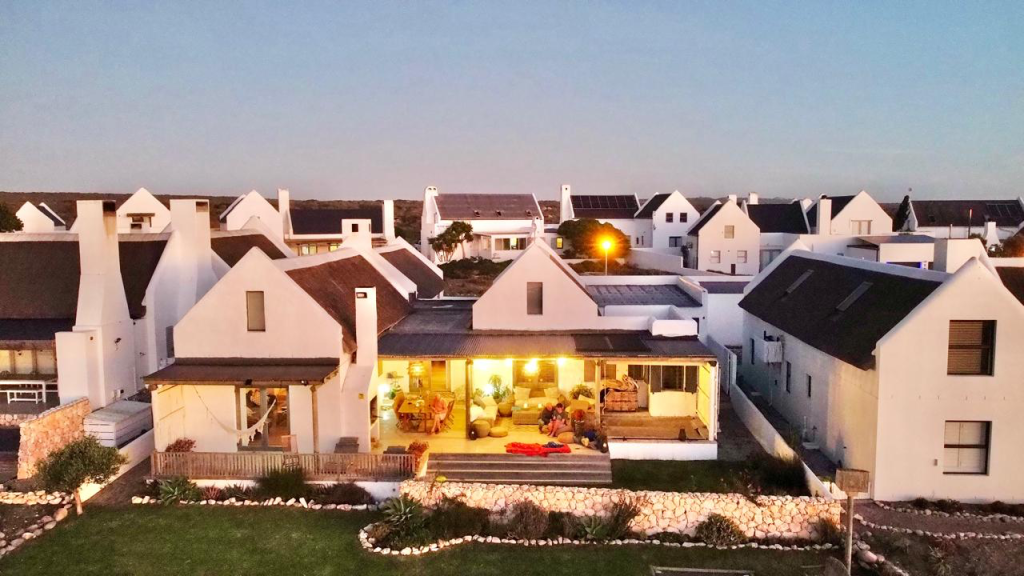
The village grew up later than its West Coast neighbours, and strict building rules have kept it from sprawling. The houses are limewashed white, low to the ground, built in the old West Coast style. Gravel roads keep everything slow. It feels somewhere between a working fishing village and a place to disappear for a week, and it never quite tips fully into either.
If you are coming from the city, the quiet takes a night to get used to. By the second evening, most of our guests have stopped noticing it. That is when the holiday starts.
When should you come?
Jacobsbaai is a year-round destination; there is no bad month. But each season offers something different, and getting the timing right shapes the kind of trip you’ll have. The quick version:
• Want the spectacle? Come in spring.
• Want the beach? Come in summer.
• Want the quiet? Come in autumn.
• Want the drama, and the best rates? Come in winter.
🌷 Spring (August to October): West Coast wildflower season 2026
If you have heard one thing about the West Coast, it is probably this. From late July into October, ground that looked dry and unremarkable transforms into carpets of orange, yellow, white, and purple. It is one of the most spectacular natural events in the country, and Jacobsbaai sits in the middle of it.
For dedicated viewing, the Postberg section of the West Coast National Park (about an hour south) opens specifically for the flowers, from 1 August to 30 September, and the Darling Wildflower Show draws crowds on the third weekend (18 to 20 September 2026). The flowers open with the sun, so the best viewing is between late morning and mid-afternoon; they stay shut on cold or overcast days, so check the forecast.
Expect daytime temperatures around 12 to 16 degrees across both months, with the sea sitting at 14 to 15 degrees, so pack layers for cool mornings and evenings. August is the wetter of the two months; rain eases off through September. And book well ahead. This is our busiest season, and it fills up every year.
🌞 Summer (November to March): beach weather and long days

Summer here is dry, warm, and bright, with daytime temperatures sitting comfortably in the high 20s. The wind picks up in the afternoons, especially in November and December when the southeaster, the “Cape Doctor,” blows hard. The days stretch late into the evening.
December and January are the South African school holidays, when the village fills up, though it never gets as busy as Paternoster or Langebaan. February is often the sweet spot: still warm, less wind, the crowds gone. One thing to know: the Atlantic stays cold all year. This is a swimming sea for the brave.
🍂 Autumn (April to May): the quiet sweet spot
For our money, autumn is the most underrated time to come. The summer heat has eased, the holiday crowds have gone, and the weather still holds: mild days, cool nights, very little rain. Accommodation is easier to find, and often gentler on the wallet.
The land is at its driest before the winter rains, but the light is beautiful: long golden afternoons, dramatic sunsets, and night skies full of stars you will not see in the city. Some restaurants run reduced hours, so it is worth checking ahead.
🧣 Winter (June to July): storms, fires, and empty beaches

Winter on the West Coast is its own thing. This is a Mediterranean climate, so winter is when the rain comes and the Atlantic shows its dramatic side. Storms roll in off the ocean, the beaches empty out, and the village turns quiet and moody.
It is mild compared with the rest of the country, with daytime temperatures in the mid teens, but it is genuinely wet and the wind can be serious. The seafood is at its best now, and there is a lot to be said for a long weekend indoors with a fire going while the weather does its thing outside. Rates are at their lowest, too. For storm-watchers and repeat visitors, this is the best value of the year.
What is there to do?
Plenty, if you know where to look, and almost all of it slow, outdoors, and shaped by the seven bays. Here is what we recommend, roughly from “easy first day” to “save it for the long weekend.”
Walk all seven bays
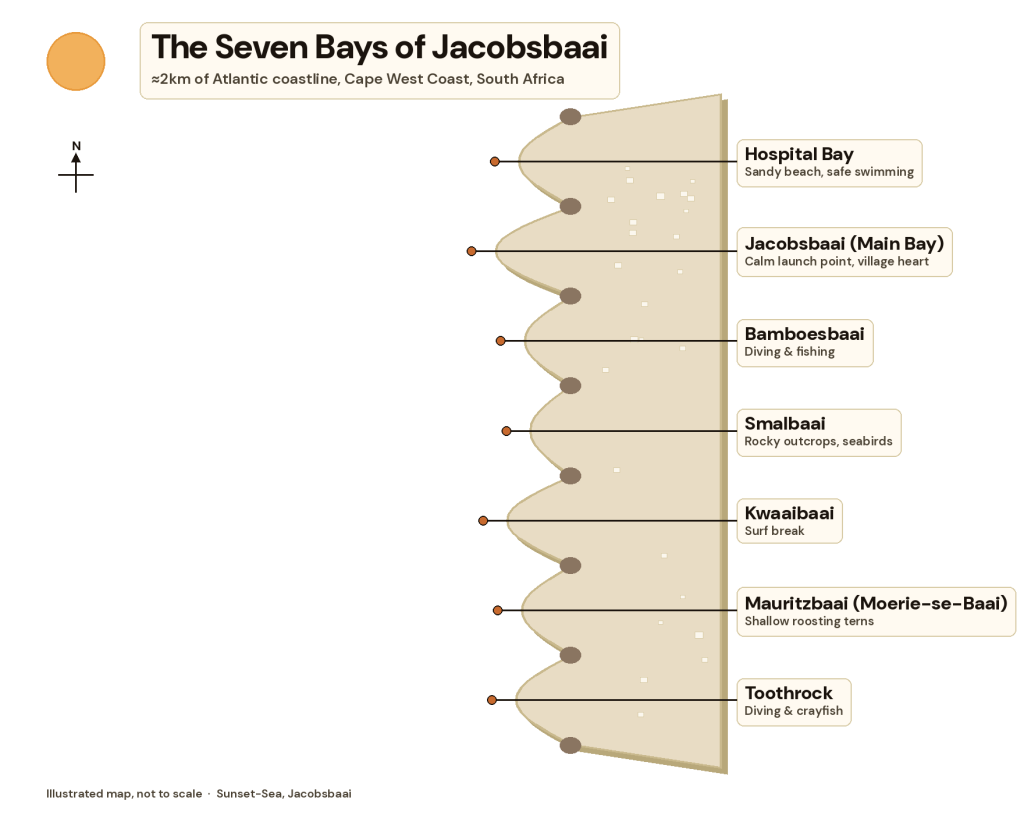
The village’s coastline breaks into seven bays, each with its own feel, and you can walk between them in a couple of unhurried hours. It is the best way to get your bearings.
Kwaaibaai picks up the bigger swell, so you’ll see surfers when conditions are right. Smalbaai and Jacobsbaai’s own main bay are the sheltered launch spots for small boats. Bamboesbaai and Toothrock are favourites with divers and crayfish gatherers in season. Hospital Bay has a sandy stretch made for swimming. And Mauritzbaai, our bay, known locally as Moerie-se-Baai, is where, if you are lucky, you’ll find hundreds of terns gathered on the rocks. Take a thermos, take your camera, take your time.
Hike the Five Bay Trail
For something more committed, the Five Bay Trail is a 28km coastal hike between Paternoster and Jacobsbaai, walked over two and a half days with overnight stops, through fynbos-covered dunes, rocky stretches, and beaches that feel completely untouched. Spring is the most spectacular time to walk it, with wildflowers covering everything.
The full route needs planning ahead, including overnight stops and a check on current conditions, but shorter sections work well as day hikes. Carry more water than you think you need; there are no taps along the way.
Fish, dive, or gather your own dinner
This coast has fed people for centuries, and the tradition continues. Bamboesbaai and Toothrock are the local spots for fishing and crayfish diving, depending on the season and the swell.
A few things matter here. Crayfish (West Coast rock lobster) and linefish both need a recreational permit, with strict limits and season dates that change every year, so check before you head out. You can apply online at fishing.dffe.gov.za (scroll down for the recreational permit application form), or get one in person at a Post Office branch. Tides and swell matter just as much, so ask a local who knows the conditions today, not just in general. If you would rather not catch your own, the wider West Coast is known for its seafood, and Paternoster is a 30-minute drive away.
See the wildflowers
In spring, the coast becomes one of the great wildflower regions on earth; locals sometimes call it “Namaqualand by the sea.” There is no ticket and no museum. You drive, walk, or simply sit, and the flowers are there: orange, yellow, white, and purple, across ground that looked bare a few weeks before. The West Coast National Park’s Postberg section, about an hour south, puts on one of the best displays in the country.
Watch the sun set into the Atlantic
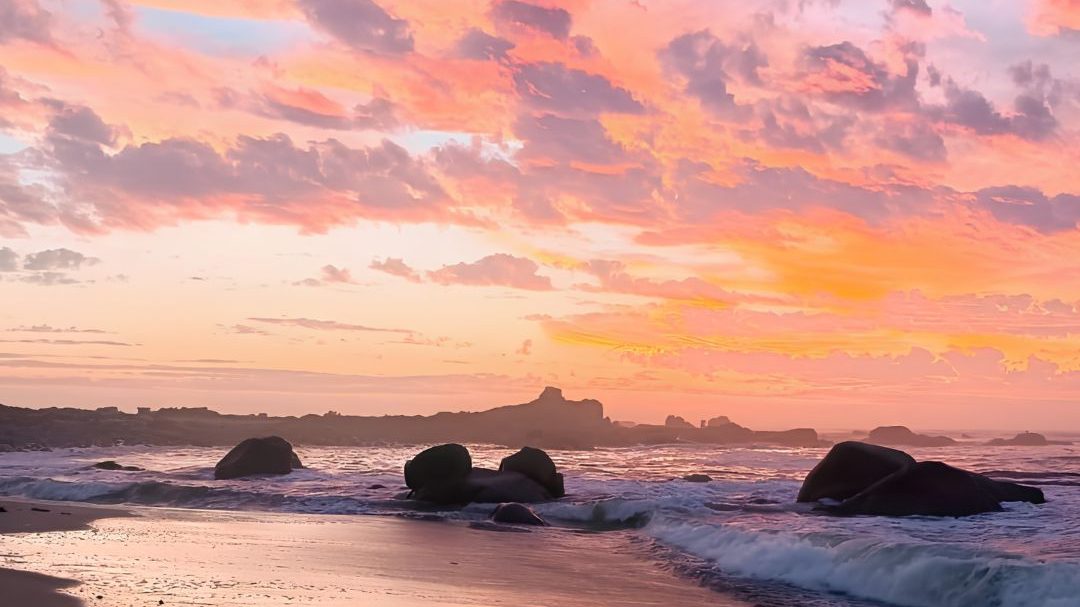
This sounds obvious until you have done it from the right spot. The West Coast faces straight into the setting sun, with open ocean and nothing on the horizon for thousands of kilometres. The sunsets here are an event, not a backdrop, and locals plan their evenings around them, drinks in hand. The west-facing bays give the best view, and the rocky outcrops at low tide make natural front-row seats.
Where do you eat on this coast?
The West Coast has been landing crayfish, mussels, and linefish for as long as people have lived here, and the eating reflects it. Jacobsbaai itself is small and quiet. Our favourite spot to support is The House of Bean & Leaf off Jacobsbay Road Main Road, but most guests either braai at the house with what they have brought, or drive out.
Paternoster, about half an hour away, is the best-known food destination on this stretch and worth a long, slow lunch. Closer to home, the simplest pleasure is a braai as the sun goes down, which is what most evenings here come down to anyway.
Good to know before you come
A few practical things make the first visit smoother:
• Stock up before you arrive. There is a small shop in the village for basics, but do a proper grocery run in Vredenburg, about 15 minutes away, before you settle in. Checkers 60Sixty can also be organised prior to your arrival at Sunset-Sea.
• Signal is patchy. Cellphone and data coverage drop off in pockets, depending on your network. Most guests decide that is part of the point.
• Pack something warm. Even on the hottest summer day, the temperature drops fast once the sun is down, and the wind has a mind of its own. The locals will tell you the same.
• Book ahead for spring. The wildflower weeks fill up earlier every year.
What we’d suggest for a first visit
Don’t try to do everything. Pick two. Spend the rest of the time moving slowly: a walk on the beach in the morning, a book in the afternoon, the day ending from wherever you have settled. The point of being here is not to leave with a checklist. It is to leave a little quieter than you arrived.
How is Jacobsbaai different from Paternoster or Langebaan?
This is the question first-timers ask most, so here is the short version. Paternoster is more developed and more polished, a weekend destination for food and crowds from Cape Town. Langebaan is built around the lagoon and water sports: kitesurfing, sailing, plenty of activity. Both are lovely, and both are busy.
Jacobsbaai is quieter than either. There is less to do in the usual sense, which is the whole appeal. People come here to walk the beach, read, braai, and let the days run together. Paternoster, Langebaan, and the wine regions are all easy day trips from here, but the village itself is the kind of place where doing nothing starts to feel like an achievement.
Frequently asked questions
Where is Jacobs Bay?
Jacobsbaai (Jacobs Bay) is a small village on South Africa’s Cape West Coast, in the Western Cape, between Saldanha Bay and Vredenburg, about 90 minutes north of Cape Town.
How do you get to Jacobs Bay from Cape Town?
Take the R27 coastal road north for about 1 hour 45 minutes; the village is signposted from the Saldanha-Vredenburg road. The drive passes Yzerfontein, the West Coast National Park, and the Langebaan lagoon.
What is the best time to visit Jacobs Bay?
Spring (August to October) for the wildflowers, summer (November to March) for the beach, autumn (April to May) for quiet and good value, and winter (June to July) for dramatic storms and the lowest rates. The West Coast National Park’s Postberg flower section is open 1 August to 30 September, and the Darling Wildflower Show runs 18 to 20 September.
What is there to do in Jacobs Bay?
Walk the seven bays, hike the coastal trail, fish or dive in season, see the spring wildflowers, and watch the sun set into the Atlantic. It is a slow, outdoor, unhurried kind of place.
How is Jacobs Bay different from Paternoster and Langebaan?
It is quieter and less developed. Paternoster is a polished food destination and Langebaan is built around water sports, while Jacobsbaai is where you go to do very little.
Is Jacobs Bay good for families and pets?
Yes. The sheltered bays, the space, and the slow pace suit families, and the village is an easy base for pet-friendly West Coast escapes.
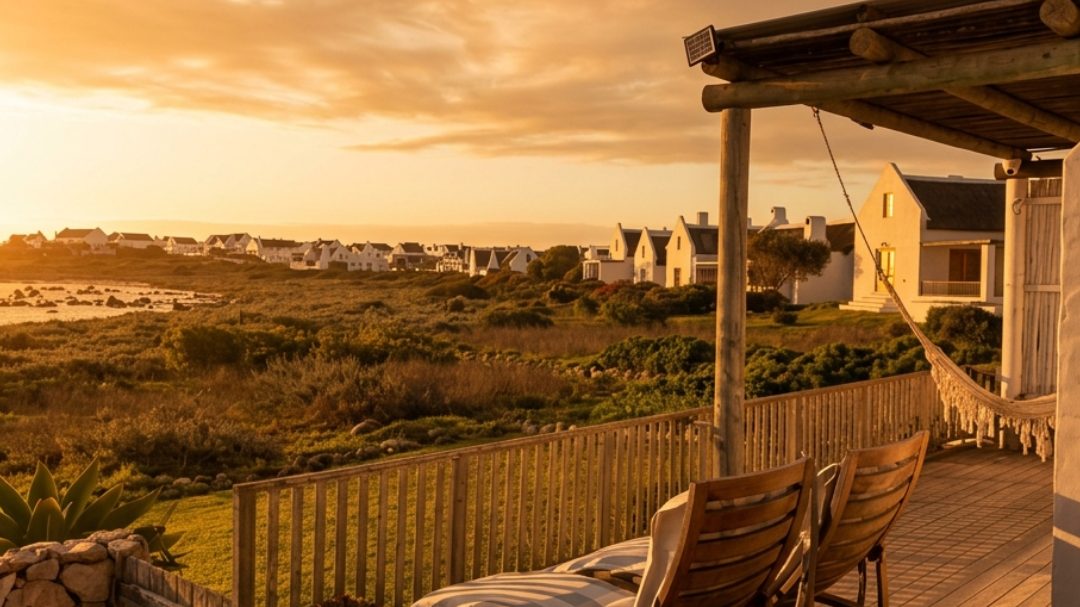
When you are ready to actually stay a while, our beach house named Sunset-Sea Jacobsbaai sits right on the sea in Mauritzbaai, one of the seven bays, sleeping eight and per-friendly. Come and let the West Coast do what it does best.
Bookings available on our website, you can also find Sunset-Sea on Airbnb where we are a guest favourite with 4.99 stars and 70+ reviews.