The Best Time of Year to Visit the West Coast

“When should I come?” is one of the most common questions we get, and the honest answer depends entirely on what you’re after. The West Coast is genuinely a year-round destination — there’s no bad month — but each season offers something different, and getting the timing right makes a real difference to the kind of trip you’ll have.

Here’s a breakdown of what to expect, season by season.

Spring (August to October) — the wildflower season

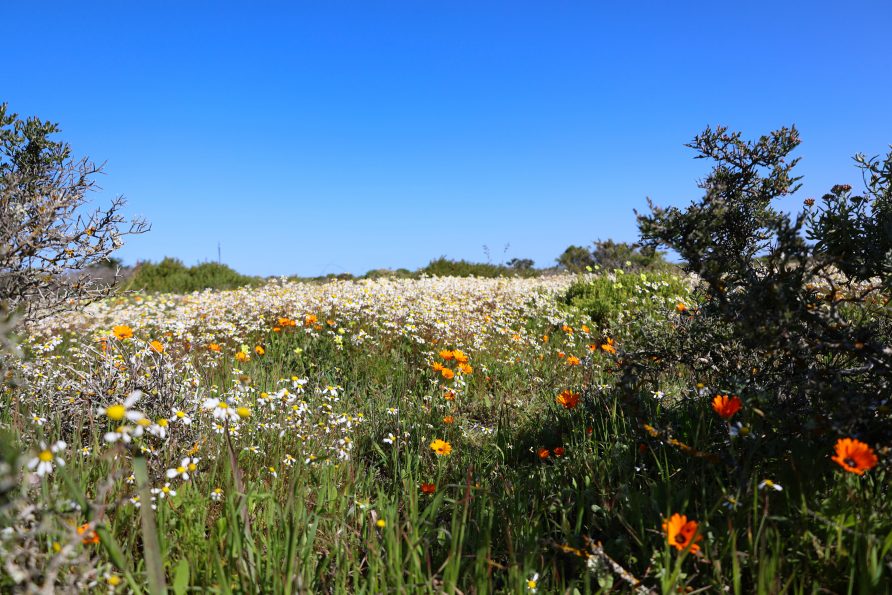
If you’ve heard one thing about the West Coast, it’s probably this. From late July through October, the dry, scrubby landscape transforms. Carpets of orange, yellow, white, and purple wildflowers cover ground that looked unremarkable just weeks earlier — one of the most spectacular natural events in the country.

The Postberg section of the West Coast National Park (about an hour’s drive south of Jacobsbaai) opens specifically during August and September for wildflower viewing, and the Darling Wildflower Show, usually held in mid-September, draws visitors from across the country.

What to expect:

  • Daytime temperatures between 18°C and 24°C
  • Cool mornings and evenings — bring layers
  • Best wildflower viewing between 11am and 3pm, when the flowers actually open (they close on cold or overcast days, so check the forecast)
  • The busiest time of year for accommodation — book well ahead

Best for: Photographers, nature lovers, anyone who’s never seen the wildflowers before. Worth seeing once in your life.

Summer (November to March) — beach weather and long days

Summer on the West Coast is dry, warm, and sunny — Mediterranean climate at its best. Daytime temperatures sit between 25°C and 32°C, the wind picks up in the afternoons (especially in November and December — the “Cape Doctor” southeaster blows strong), and the days stretch out late into the evening.

December and January are the South African school holidays, and the village fills up — though Jacobsbaai never gets as busy as Paternoster or Langebaan. February is often the best summer month: still warm, less wind, fewer crowds as the holidays end.

What to expect:

  • Hot, dry days with cool ocean breezes
  • The Atlantic stays cold year-round — this is a swimming sea for the brave, not for warm-water lovers
  • Sunset planning becomes a daily ritual
  • Restaurants and shops at their busiest

Best for: Beach days, families, summer holidays, anyone who wants long evenings outdoors.

Autumn (April to May) — the quiet sweet spot

For our money, autumn is the most underrated time to visit. The summer heat has eased, the holiday crowds have left, and the weather is still reliable — mild days, cool nights, very little rain. Accommodation is easier to find and often cheaper.

The landscape is at its driest now (the winter rains haven’t arrived yet), but the light is beautiful — long golden afternoons, dramatic sunsets, clear nights with stars you can’t see in the city.

What to expect:

  • Daytime temperatures around 20°C to 24°C
  • Cool evenings, light layers essential
  • Quieter beaches and trails
  • Some restaurants and businesses on reduced hours — worth checking ahead

Best for: Couples, writers, walkers, anyone wanting peace without compromising on weather.

Winter (June to July) — storms, fires, and empty beaches

Winter on the West Coast is its own thing entirely. The Western Cape has a Mediterranean climate, which means winter is when it rains — and when the Atlantic shows its dramatic side. Storms roll in across the ocean, beaches are empty, and the village takes on a quieter, moodier feel.

This isn’t winter as much of South Africa knows it. It’s mild compared to Johannesburg or the Drakensberg — daytime temperatures around 14°C to 18°C — but it’s wet, and the wind can be serious. The seafood is at its best in winter (the cold makes everything tastier), and there’s something to be said for spending a long weekend indoors with a fire going while the storms do their thing outside.

What to expect:

  • Daytime temperatures 14°C to 18°C, dropping to single digits at night
  • Genuine rainfall — this is the rainy season
  • Dramatic Atlantic swells and stormy skies
  • The lowest accommodation rates of the year
  • A few businesses closed for winter — check ahead

Best for: Storm-watchers, repeat visitors, anyone who finds the idea of an empty beach in dramatic weather more romantic than depressing. Also the best value of any season.

A quick comparison

If you only read one line of this post, here it is:

  • Want the spectacle? Spring.
  • Want the beach? Summer.
  • Want the quiet? Autumn.
  • Want the drama (and the deal)? Winter.

One last note

Whichever season you choose, two things stay constant: the wind has a mind of its own, and the temperature drops fast once the sun sets. Even on the hottest summer day, bring something warm for the evening. The locals will tell you the same thing.

And book ahead for spring. Genuinely. The wildflower season fills up faster every year.


Want to know what to actually do during your visit? We’ve covered that in another post.
5 Things to Do in Jacobsbaai (Beyond the Beach)

Jacobsbaai isn’t a place that hands you a packed itinerary on arrival. There are no waterparks, no shopping malls, no must-see landmarks queueing for your attention. What there is, if you know where to look, is plenty to do — most of it slow, most of it outdoors, and most of it shaped by the seven bays that give the village its character.

Here’s what we recommend, in rough order from “easiest first day” to “save it for the long weekend.”

1. Walk all seven bays in a single morning

The village’s two-kilometre stretch of coastline is broken into seven bays, each with its own personality. You can walk between them in a couple of hours at an easy pace, and it’s the single best way to get your bearings.

Each bay has a different feel:

  • Kwaaibaai picks up the bigger swell — you’ll see surfers here when the conditions are right
  • Smalbaai and Moerie se Baai are the sheltered launching spots for small boats
  • Bamboesbaai and Toothrock are favourites with divers and crayfish gatherers (in season, with a permit)
  • Hospital Bay has a sandy stretch perfect for swimming — the name comes from the 1800s, when arriving ships would drop off sick passengers here to be quarantined before reaching Cape Town
  • Mauritzbaai is the bay where, if you’re lucky, you’ll spot hundreds of terns gathered on the rocks

It’s an unhurried walk. Take a thermos, take your camera, take your time.

2. Hike the Five Bay Trail

For something more committed, the Five Bay Trail is a 28-kilometre coastal hike that runs between the wider area, traditionally walked over two and a half days with overnight stops. It’s part of the West Coast Biosphere Reserve trail network — proper hiking, with fynbos-covered dunes, dramatic rocky stretches, and beaches that feel completely untouched.

A few practical notes:

  • The full trail needs planning ahead — you’ll want to book overnight stops and check current conditions
  • If you don’t want to commit to all 28 km, shorter sections work as day hikes
  • Spring (August through October) is the most spectacular time to walk it — wildflowers cover everything
  • Always carry more water than you think you need; there are no taps along the route

3. Fish, dive, or gather your own dinner

This part of the coast has been feeding people for centuries, and the tradition continues. Bamboesbaai and Toothrock are the local spots for fishing and crayfish diving, depending on the season and conditions.

A few important caveats:

  • Crayfish (West Coast rock lobster) requires a recreational permit, available from the Post Office. Season dates change yearly — always check before you go out
  • Linefish requires the same kind of permit, with strict daily bag limits
  • Tides matter. So does the swell. Ask a local before you head out — somebody who knows the conditions today, not just in general

If you’d rather not catch your own, the wider West Coast region has plenty of restaurants known for fresh seafood — Paternoster is a 30-minute drive and is particularly well-regarded.

4. See the wildflowers (in season)

From late July through to October, the West Coast becomes one of the most spectacular wildflower regions on earth. Locals sometimes call this area “Namaqualand by the sea” — referring to the inland wildflower region further north, but applied here because the spectacle is similar.

It’s not a museum, and there’s no entry ticket. You drive, walk, or just sit, and the flowers are simply there: carpets of orange, yellow, white, and purple covering ground that looked dry and unremarkable a few weeks earlier.

For dedicated wildflower viewing, the West Coast National Park (about an hour’s drive south) opens its Postberg section specifically during August and September, which is widely considered one of the best displays in the country.

5. Watch the sun set into the Atlantic

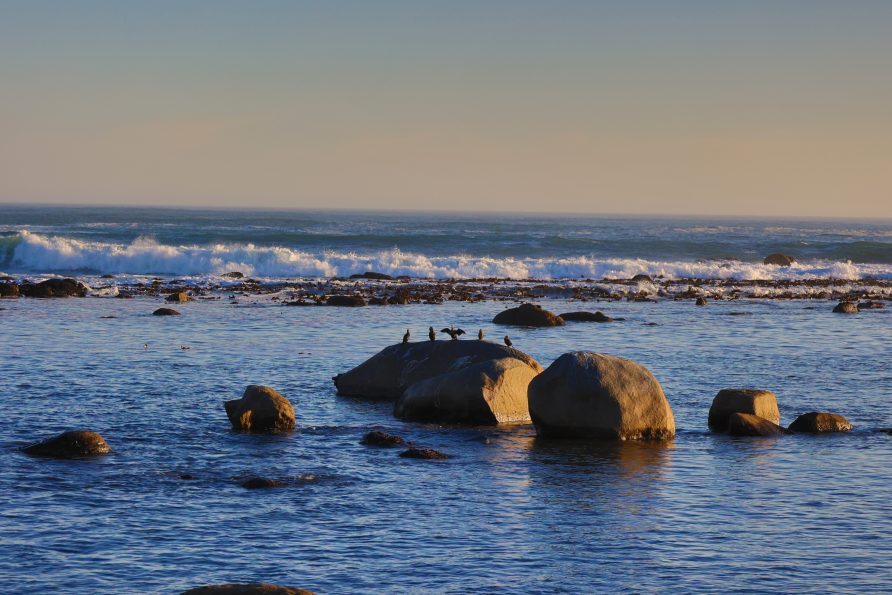
This sounds obvious until you’ve done it from the right spot. The West Coast faces directly into the setting sun across open ocean, with nothing on the horizon for thousands of kilometres. The sunsets here are an event, not a backdrop — locals plan their evenings around them, drinks in hand, between October and March when the timing aligns with dinner.

The bays facing west give you the best views. Anywhere along the coastline works, but the rocky outcrops at low tide create natural seats with a front-row view.

What we’d suggest

If it’s your first time in Jacobsbaai, our suggestion is: don’t try to do everything. Pick two. Spend the rest of your visit moving slowly, walking the beach in the morning, reading in the afternoon, and watching the day end from wherever you’ve settled.

The point of being here isn’t to leave with a checklist. It’s to leave a little quieter than you arrived.


Want recommendations for day trips a little further afield — Paternoster, Langebaan, the Cederberg wine region? We’ve covered those in another post.