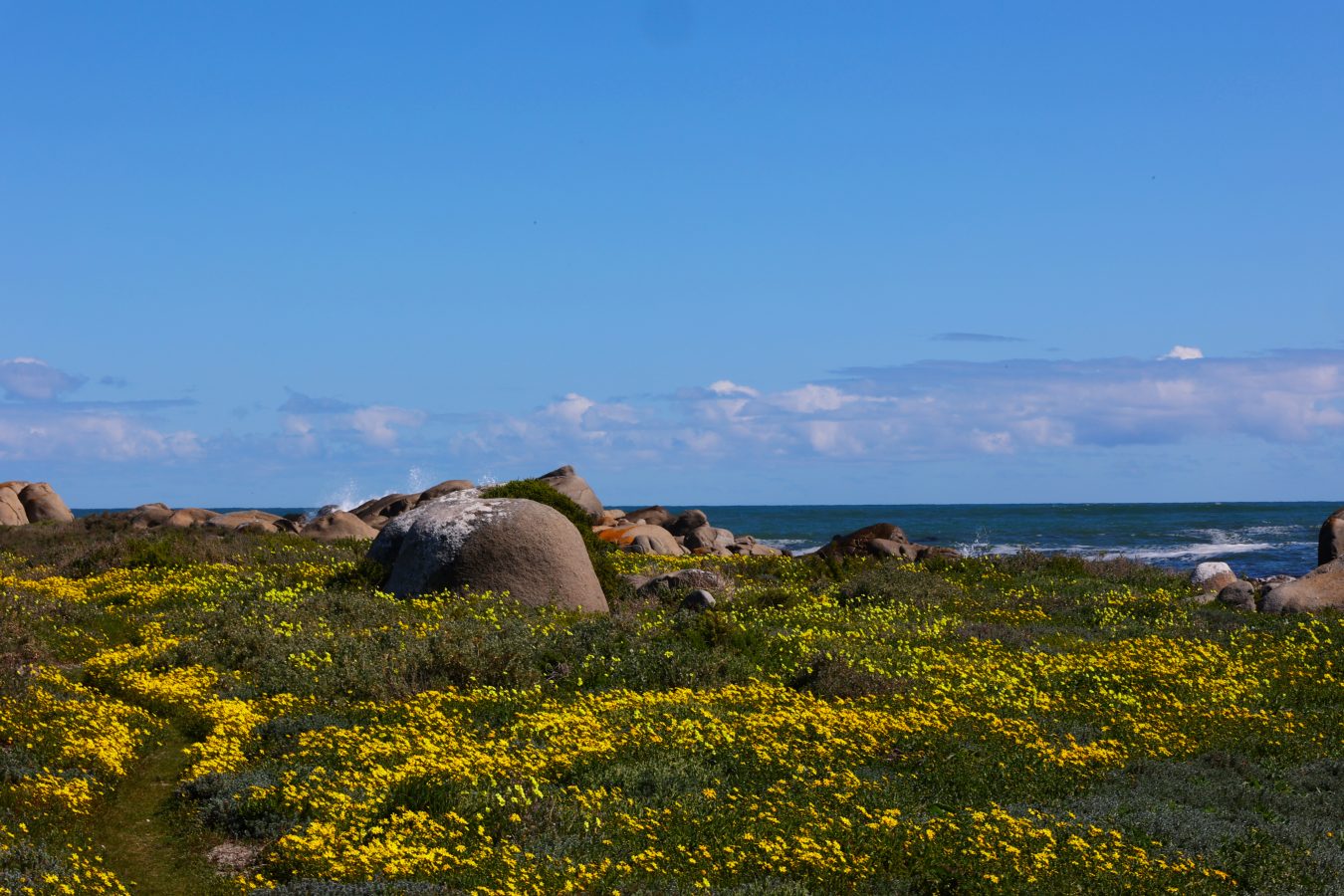
If you’ve never been to Jacobsbaai, you’re not alone. Tucked between Saldanha Bay and Vredenburg on South Africa’s West Coast, this small fishing village quietly does its own thing while better-known towns up the coast take the headlines. That’s part of its appeal — and also why it tends to surprise first-time visitors in the best way.
Here’s what to know before you come.
Where exactly is it?
Jacobsbaai sits about 120 kilometres north of Cape Town along the R27, the scenic coastal road that runs up the West Coast. The drive takes roughly an hour and a half if you don’t stop, though most people do — the route passes Yzerfontein, the West Coast National Park, and Langebaan lagoon on the way.
From Cape Town, you follow the R27 north, turn left at the Saldanha turn-off onto the R79, and the village is signposted clearly from the Saldanha-Vredenburg road. Once you turn off the main road, the tar gives way to gravel, and you’ve arrived.
What kind of place is it?
Jacobsbaai is small. Genuinely small. There’s no shopping centre, no traffic lights, no chain restaurants. What there is, is two kilometres of coastline broken into seven separate bays, each with its own character — some sandy, some rocky, all of them quiet.
The village was developed relatively recently compared to its neighbours, but strict building restrictions have kept it from sprawling. The houses are limewashed white, low to the ground, and built in the traditional West Coast style. Gravel roads keep traffic slow. The overall feel is somewhere between a working fishing village and a peaceful seaside escape — never quite tipping fully into either.
If you’re coming from a city, the silence takes some getting used to. By the second night, most guests stop noticing.
What’s the area known for?
Three things, mainly:
Seafood. The West Coast has been catching crayfish, abalone, mussels, and linefish for as long as people have lived along this coastline. The nearby villages of Paternoster and Saldanha are well-known for their seafood restaurants, and Jacobsbaai shares the same waters.
Wildflowers. From late July through September, the West Coast comes alive with spring wildflowers. Fields that look dry and unremarkable in summer transform into carpets of orange, yellow, white, and purple. It’s one of South Africa’s most spectacular natural events, and Jacobsbaai sits right in the middle of it.
Wildlife and birdlife. The coastal fynbos around the village supports small antelope (duiker and steenbok), tortoises, the occasional jackal, and a long list of bird species — particularly during migration seasons.
How is it different from Paternoster or Langebaan?
This is the most common question first-timers ask, so worth addressing directly.
Paternoster is more developed, more polished, and has become a destination for foodies and weekend visitors from Cape Town. It’s lovely, but busy.
Langebaan is built around water sports — kitesurfing, sailing, and the protected lagoon make it a hub for activity. It’s also growing fast.
Jacobsbaai is quieter than both. There’s less to do in the conventional sense, which is exactly the point. People come here when they want to slow down, walk the beach, read a book, and let the days run together. Day trips to Paternoster, Langebaan, and the surrounding wine regions are easy from here — but the village itself is the kind of place where doing nothing feels like an achievement.
When to come
Jacobsbaai is a year-round destination, but each season offers something different:
- Spring (August–October): Wildflower season. The most popular time to visit, and worth booking ahead.
- Summer (November–March): Warm, dry, perfect for the beach. The village is at its busiest over December and January.
- Autumn (April–May): Quiet, mild, and arguably the best value time of year.
- Winter (June–July): Dramatic Atlantic storms, empty beaches, and roaring fires. A favourite of repeat visitors.
A quick practical note
Jacobsbaai has limited cellphone signal in some pockets and patchy mobile data depending on your network. There’s a small shop in the village for basics, but you’ll want to stock up on groceries in Vredenburg (15 minutes away) before you settle in. Most guests treat the drive in as part of the slowing-down process.
Welcome to the West Coast. We hope you stay a while.